

 English

You might wonder how far you can travel on a single charge with your electric wheelchair. Most models let you go between 10 and 20 miles before you need to recharge. Some wheelchairs can travel just 3 miles, while others can reach over 25 miles.
Many wheelchairs cover 10 to 15 miles per charge.
Some advanced types reach up to 25 miles or even more.
Here is a quick look at different models and their typical ranges:
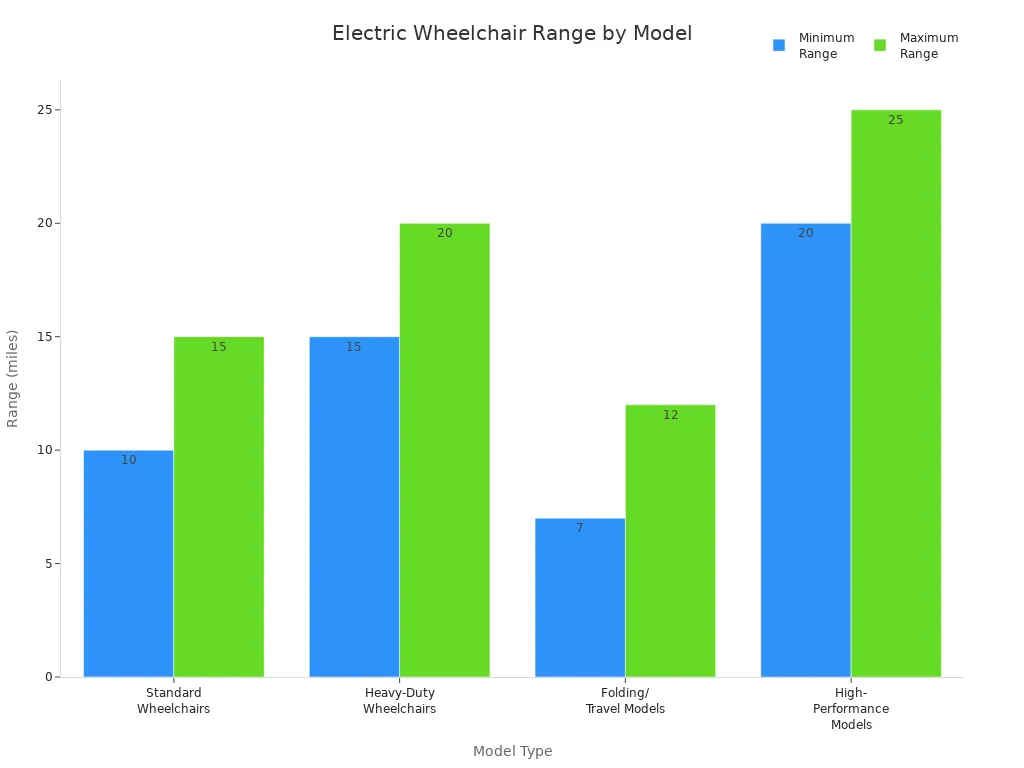
The distance you can travel depends on the type of wheelchair you use. You can find a model that fits your daily needs and helps you stay active.
Key Takeaways
Most electric wheelchairs can go 10 to 20 miles on one charge. Pick a model that matches what you need each day.
The battery type is important. Lithium-ion batteries are lighter. They let you go farther than sealed lead-acid batteries.
Your weight and the ground change how far you can go. Lighter people and flat ground help you go more miles.
Taking care of your wheelchair and battery helps it go farther. Clean your chair and check the battery a lot.
Plan your trips carefully. Do not carry heavy things or go on bumpy ground if you want to go farther.
Electric Wheelchair Range
Average Range
You might wonder how far you can go before charging. Most electric wheelchairs can travel 10 to 20 miles on one charge. Some models only go 3 miles, but others can go more than 25 miles. The type of wheelchair you pick affects the average range.
Here is a table showing the average range for different models:
Model Type | Average Range (miles) |
|---|---|
Standard Models | 10-15 |
Advanced Models | 20 or more |
Tip: Always look at the manufacturer's details for the best range information.
Range by Battery Type
The battery in your wheelchair decides how far you can go. Most wheelchairs use sealed lead-acid batteries or lithium-ion batteries. Lithium-ion batteries are popular because they are lighter and last longer. They also store more energy than sealed lead-acid batteries. This lets you travel farther on one charge with lithium-ion batteries.
Energy density matters a lot. Lithium-ion batteries hold lots of power in a small package. Sealed lead-acid batteries are heavier and store less energy. This changes how far you can go and how easy it is to move your wheelchair.
Here is a table comparing the two main battery types:
Characteristic | SLA (Lead Acid) | Li-ion (Lithium) |
|---|---|---|
Weight | Heavy | Very Light |
Cycle Life | Short (300-500) | Long (500-1000+) |
Energy Density | Low | High |
Self-Discharge | Higher | Very Low |
Maintenance | Maintenance-free | Maintenance-free |
New battery technology is making things better. Lithium-ion batteries now have more energy and last longer. Some wheelchairs use fast-charging batteries, so you wait less. Smart battery systems show how much power you have left. This helps you plan your trips. Some models use regenerative braking, which charges the battery when you slow down.
Lithium-ion batteries are lighter and let you go farther.
Fast-charging batteries mean less waiting.
Smart technology helps you check battery life.
Regenerative braking can help you travel more miles.
Model Differences
Electric wheelchairs are not all the same. The range changes a lot based on the model you choose. Basic models usually go 8 to 12 miles. Mid-tier models can travel 12 to 18 miles. Advanced models reach 18 to 25 miles. High-performance models can go 25 miles or more.
Here is a table showing the range for different models:
Model Type | Range (miles) | Range (km) |
|---|---|---|
Basic models | 8–12 | 13–19 |
Mid-tier models | 12–18 | 19–29 |
Advanced models | 18–25 | 29–40 |
High-performance models | 25–35+ | 40–56+ |
You can compare electric wheelchair ranges to other devices. Lightweight folding power wheelchairs usually go about 10 miles. All-day use powerchairs and all-terrain models can reach up to 20 miles. High-performance models can go even farther, sometimes over 25 miles.
Type of Wheelchair | Distance Range |
|---|---|
Lightweight folding power wheelchairs | 10 miles |
Bespoke all-day use powerchairs | 20 miles |
All terrain power wheelchairs | 20 miles |
Note: The range depends on your weight, the ground, and how you use your wheelchair. Think about your daily needs when picking a model.
Factors Affecting Range
Many things can change how far you can travel on a single charge with your electric wheelchair. Knowing these factors helps you plan your trips and get the most out of your device.
Battery and Capacity
The battery is the heart of your electric wheelchair. A bigger battery, measured in amp-hours (Ah), lets you go farther. If your wheelchair has a higher Ah rating, you can expect longer trips before needing to recharge. For example:
A lightweight wheelchair with a 10-12Ah battery can travel about 9-15 miles per charge.
A larger battery means more distance, but it may also add weight.
Tip: Always check your battery's capacity and keep it charged for the best performance.
User Weight
Your weight affects how far your wheelchair can go. Heavier loads use more energy, which lowers the range. Most wheelchairs support 250 to 400 pounds. If you carry extra items or exceed the limit, your travel distance will drop.
Less weight means you can travel farther.
Try not to overload your wheelchair with heavy bags.
Terrain and Surfaces
The type of ground you travel on makes a big difference. Smooth floors let you go farther, while rough or steep surfaces use more power. Here is a quick guide:
Terrain Type | Estimated Range |
|---|---|
Smooth indoor floor | 20–22 km |
City sidewalks | 15–20 km |
Grass or gravel | 10–15 km |
Steep slopes | 8–12 km |
Choose your route wisely to save battery life.
Speed and Usage
How you drive matters. Moving at a steady, slow speed helps you go farther. Quick starts, stops, and high speeds use more energy. Try to keep a constant pace when possible.
Note: Lower speeds can extend your range and make your ride smoother.
Maintenance
Taking care of your wheelchair keeps it running longer. Regularly check your tires, battery, and other parts. Clean your wheelchair and keep the battery terminals free from dirt. Charge your battery often and avoid letting it run too low.
Proper tire pressure helps you move easily.
Routine checks can catch small problems before they get bigger.
If you follow these tips, you can enjoy longer trips and fewer problems with your electric wheelchair.
Maximizing Electric Wheelchair Range
Battery Care Tips
Taking care of your battery helps you get the most out of every charge. You should charge your battery for 8 to 14 hours after each use. For new batteries, give them an initial charge of 18 hours before you use your wheelchair. Try not to overcharge by keeping charging time under 14 hours. Recharge your battery when it drops to about 50% to keep it healthy. Store and charge your wheelchair in a place where the temperature stays between 64°F and 77°F (18°C and 25°C).
Tip: Charge your battery every night and use the charger that came with your wheelchair. Make sure the charging area has good airflow.
Charging after every use keeps your battery strong. Modern chargers stop charging when the battery is full, so you do not have to worry about overcharging.
Efficient Driving
How you drive can make a big difference in how far you go. Try these tips to extend your range:
Stick to flat, hard surfaces like sidewalks or floors. These use less power than grass or gravel.
Lighten your load by carrying only what you need.
Keep a steady pace instead of speeding up and slowing down often.
Upgrade to lithium batteries if possible. They are lighter and last longer.
Note: Well-maintained batteries help you travel farther.
Regular Maintenance
Regular care keeps your electric wheelchair running smoothly. Clean your wheelchair often to stop dirt from building up. Check the wheels and motors for any problems. Follow the manufacturer's advice for battery care and avoid letting the battery run all the way down. Store your wheelchair in a clean, dry, and cool place.
Have a professional service your wheelchair at least once a year.
Clean moving parts every month with warm water and soap, then dry them well.
Remove dirt and hair from the caster axles to keep everything moving easily.
Taking these steps helps you enjoy longer trips and fewer problems with your wheelchair.
Choosing the Right Electric Wheelchair
Assessing Your Needs
Start by thinking about what you do every day. Think about what you want your electric wheelchair to help you with. People need different things from their wheelchairs. It is good to look at a few important areas:
Physical assessments show how strong you are and how well you move.
Mobility limitations tell you how much help you need from your wheelchair.
Upper extremity functions show if you can use the controls easily.
Mental capabilities make sure you can use the chair safely.
Willingness and motivation help you stay active and do things on your own.
You can talk to a healthcare professional for help. They can check your weight and talk about what you need to get around. They can also help you pick the best wheelchair for your comfort and safety.
Comparing Ranges
When you look at different wheelchairs, do not just check the range. The table below shows other important things to think about:
Factor | Description |
|---|---|
Battery size | Bigger batteries let you go farther. |
Battery charge and condition | A full, healthy battery gives you the best range. |
Electrical functions | Things like seat lifts use more power and lower your range. |
Prevailing temperature | Cold weather can make your battery weaker by up to 25%. |
Terrain | Hills and rough ground use more energy. |
Speed and driving style | Going fast and stopping a lot uses more battery. |
Tyres | The wrong tyres or low pressure can lower your range. |
Weight of user | Heavier users may not go as far. |
You can use this table to compare wheelchairs. Pick the one that fits your life best.
Considering Your Environment
Think about where you will use your wheelchair most of the time. Where you use it can change what kind of wheelchair you need:
Mobility needs: Will you use your wheelchair inside, outside, or both?
Battery life: Make sure the battery lasts as long as you need each day.
Maneuverability: Check if the wheelchair fits through your doors and hallways.
If you are not sure, ask a mobility expert for advice. They can help you try different wheelchairs. They can also help you find the best one for you and your home.
Conclusion
You can travel farther than ever with today's electric wheelchairs. Improved batteries, lightweight frames, and smart features help you go over 30 miles per charge. Many users now look for comfort, safety, and ways to customize their chairs. To get the most from your wheelchair:
Charge and care for your battery.
Drive on smooth paths and avoid heavy loads.
Plan your routes and get regular checkups.
For more help, guides like the Power Wheelchair Guide and Team Gleason's resources offer expert advice. Reach out to a mobility expert if you want support or have questions.
FAQ
How long does it take to charge an electric wheelchair?
You usually need 8 to 14 hours to fully charge your wheelchair. New batteries may require up to 18 hours for the first charge. Always use the charger that comes with your wheelchair.
Can you use an electric wheelchair in the rain?
You can use your wheelchair in light rain, but avoid heavy downpours. Water can damage electrical parts. Dry your wheelchair after exposure to moisture.
What happens if your battery runs out during a trip?
If your battery runs out, your wheelchair will stop moving. You should plan your trips and check battery levels before leaving. Carry a charger or ask for help if needed.
How often should you service your electric wheelchair?
You should have your wheelchair serviced once a year by a professional.
Clean and check moving parts every month to keep everything working well.

Get our 2026 Product Catalogue & Book a VIP Meeting
Leave your contact information and our online customer service will contact you shortly.
Reserve a 15-min VIP Consultation with our Engineering Lead. The number of places is limited.
