

 English

Is your wheelchair strong enough to support your weight safely? With obesity affecting more than 650 million people globally (according to WHO), the demand for bariatric wheelchairs has surged across healthcare, home settings, and long-term care facilities. But when does a standard wheelchair stop being "enough," and what exactly defines "bariatric weight capacity" in the wheelchair industry?
Many buyers — from private users to procurement specialists — have the same question: What weight is considered bariatric for a wheelchair? Selecting the wrong class can put users at risk and increase maintenance costs.
Key Takeaway
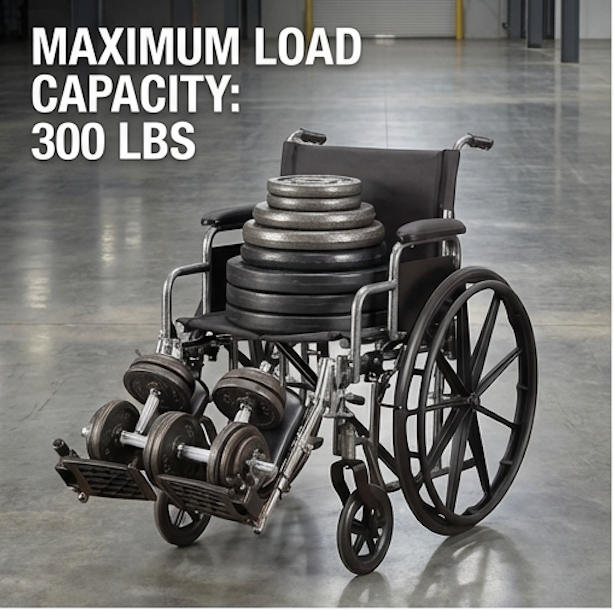
A bariatric wheelchair typically supports users weighing over 300 lbs (136 kg), with ranges available up to 700 lbs (317 kg). Users must match their wheelchair to their weight range to ensure safety, durability, comfort, and insurance compliance.
What Does "Bariatric" Mean in the Wheelchair Industry?
The term bariatric originates from bariatrics — a field of medicine dealing with obesity. In the context of mobility aids, a bariatric wheelchair is specifically designed for individuals who exceed the weight limits of standard models.
According to the Centers for Medicare & Medicaid Services (CMS), most standard manual wheelchairs are tested up to 250 lbs. Anything tailored to accommodate weight capacities above 300 lbs — while ensuring maneuverability, seat width comfort, and reinforced frames — falls under the bariatric category.
Key characteristics of bariatric wheelchair users:
Body mass typically above 136 kg (300 lbs)
Require seat widths from 22" to 28"+
Need enhanced support for long-term seating & transfer stability
Standard Wheelchair vs Bariatric Wheelchair: Key Differences
| Feature | Standard Wheelchair | Bariatric Wheelchair |
|---|---|---|
| Max User Weight | 250–300 lbs (113–136 kg) | 300–700 lbs (136–317 kg) |
| Frame Material | Lightweight steel or aluminum | Aircraft-grade aluminum, reinforced steel |
| Seat Width Options | 16"–20" | 22", 24", 26", up to 28" models |
| Wheel Size & Axle Strength | Standard | High-durability with shock absorption |
| Usage Frequency | Intermittent or low-weight daily use | Heavy-duty, daily, or medical-grade support |
| Common Users | Elderly, disabled, injury recovery | Obese users, bariatric patients, large frame |
Weight Classifications in Bariatric Wheelchair Design
To accommodate different users within the bariatric segment, wheelchair manufacturers classify products into tiers. Here is a general breakdown adopted in the industry:
| Weight Classification | User Weight Range | Common Applications |
|---|---|---|
| Entry-Level Bariatric | 300–350 lbs | Basic home care, low-activity support |
| Mid-Level Bariatric | 350–450 lbs | Frequent users needing moderate structure |
| Heavy-Duty Bariatric | 450–600 lbs | Long-term users, rehab, high-use institution |
| Extreme Bariatric | 600–700 lbs+ | Medical use, specialized care (e.g. post-surgery obese patients) |
Note: Many advanced bariatric wheelchairs are also crash-tested and insurance billable, especially in the U.S.
How to Choose the Right Bariatric Wheelchair Based on User Weight?
Selecting the wrong type of wheelchair will not only lead to fast wear and tear — it can be dangerous. Here's a checklist to get the right fit:
Determine the user's actual weight
Always allow a 10-15% margin beyond the user's weight for safety buffer.
Measure Seat Width Properly
For users over 300 lbs, a minimum of 22" is recommended.
Models BME4613 and BME4618 are available in 22", 24", 26", and even 28" seat widths.
Match the use scenario
Low activity? Home use? Choose Entry-Level.
Long-term hospital use? Upgrade to heavy-duty frame models.
Consider user mobility
Fully self-propelled, partially assisted, or electrically powered?
Bariatric electric wheelchairs are gaining popularity for those with limited arm strength.
Check transportation needs
Foldable designs like the BME4613 (more mobile) vs rigid-framed rehab-grade models like BME4618
What Are the Risks of Using an Underrated Wheelchair?
An underrated wheelchair used by a bariatric user exceeding weight limits can lead to:
Chassis failure (frame collapse or bending mid-use)
Brake malfunction or instability on slopes
Increased risk of falls and injury
Compromised insurance coverage: Medicare/insurance may deny claims if weight criteria are mismatched
Seat deterioration from under-designed cushioning/foam
In a recent study, over 22% of obese patients using standard chairs experienced One or more structural issues in under 6 months.
Recommended Bariatric Wheelchair Models from Brother Medical – BME4613 & BME4618
Brother Medical proudly manufactures engineered-for-strength bariatric wheelchairs with precision ISO-certified processes and crash-tested materials.
Model: BME4613 – Versatile Active-Leg Model
Features:
Weight Capacity: 150–180 kg (330–400 lbs)
Seat Width Options: 22", 24", 26", 28"
Design Type: Foldable aluminum frame, agile but sturdy
Use Case: Ideal for active users or community/home care mobility
Lightweight enough to store in SUV/trunk
Model: BME4618 – Reinforced Orthopedic Model
Features:
Weight Capacity: 180 kg+ (400–450 lbs)
Seat Width Options: 24", 26", 28"
Rigid Frame with dual cross-bracing
Application: Hospitals, orthopedic care, long-term rehab
Elevated weight load support + oversized rear wheels
Both models are available with heavy-duty solid tires, urethane cushions, adjustable armrests, and positional seat belts.

Conclusion
As obesity rates increase, mobility independence isn't a luxury — it's a medical necessity. Bariatric users require thoughtfully-built equipment that supports real weight, not just average measurements.
Knowing that 300 lbs is the industry standard cutoff for bariatric classification helps users make informed decisions and prevents unnecessary risk. Whether caring for yourself or a loved one, or managing a facility's DME procurement, choosing the right bariatric wheelchair ensures dignity, safety, and quality of life.
Models like Brother Medical's BME4613 and BME4618 go beyond compliance — they offer mobility without compromise. Contact now!
FAQs
Q1: What is the weight limit for a standard wheelchair?
A: Most standard wheelchairs hold up to 250–300 lbs. Beyond this, you should consider a bariatric wheelchair.
Q2: At what weight does Medicare classify a patient as needing a bariatric wheelchair?
A: Typically, Medicare guidelines classify those needing support over 300 lbs (136 kg) as qualifying for bariatric equipment.
Q3: What seat width is best for bariatric users?
A: 22" to 28" widths are commonly offered. Choose based on hip width + 1–2" for comfort.
Q4: Is a 28" seat width too wide?
A: Not if the user's weight exceeds 180 kg or frame size supports that width. Brother Medical's BME4613 supports this configuration safely.
Q5: Are bariatric wheelchairs foldable?
A: Yes, models like the BME4613 balance foldability with high load capacity.

Get our 2026 Product Catalogue & Book a VIP Meeting
Leave your contact information and our online customer service will contact you shortly.
Reserve a 15-min VIP Consultation with our Engineering Lead. The number of places is limited.
