

 English

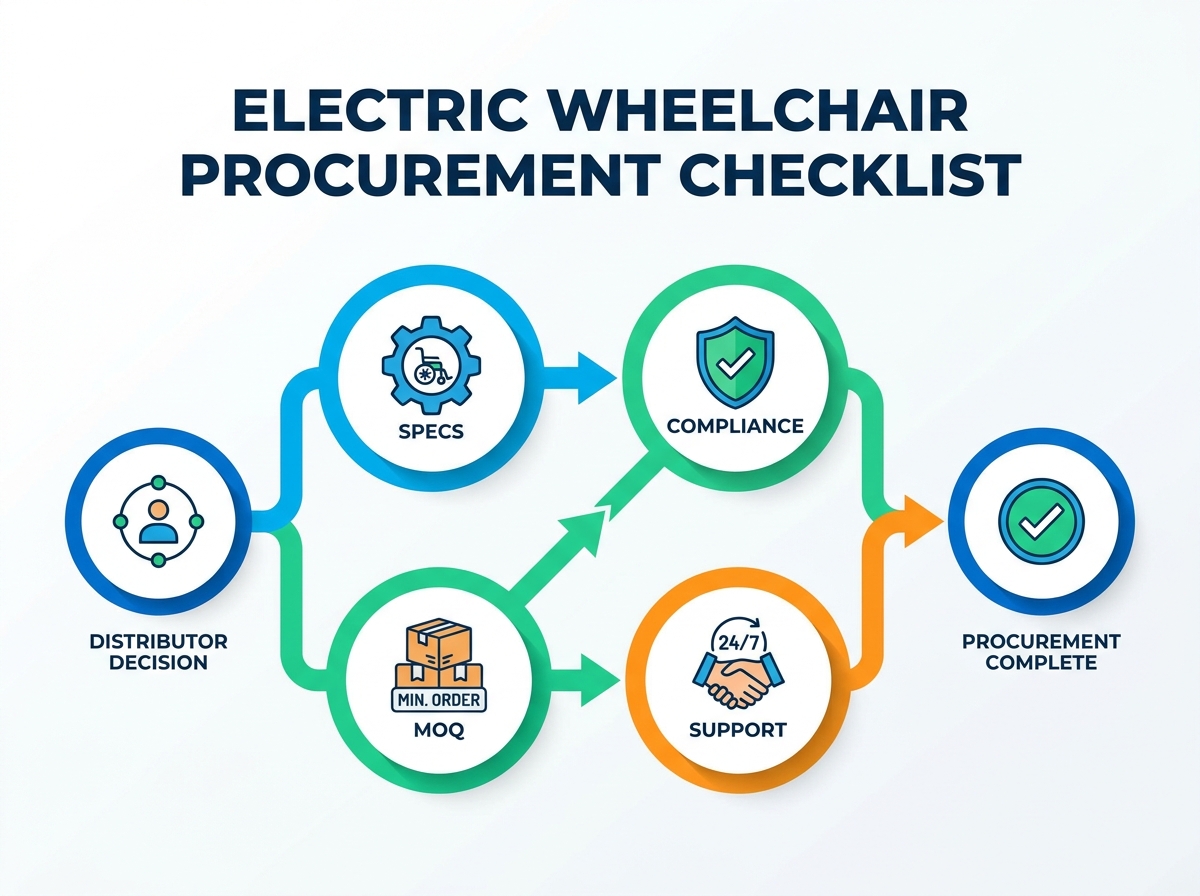
Procuring medical mobility devices carries significant financial and liability risks. A single compliance failure, structural defect, or battery malfunction can result in costly product recalls, severe damage to dealership reputation, and eroded margins. Distributors, retail dealerships, and care facilities must balance competitive unit economics with stringent regulatory requirements. You need a rigorous framework to evaluate manufacturing quality, long-term storage durability, and supplier reliability. This guide provides a systematic, evidence-based procurement checklist. You will learn how to objectively evaluate technical specifications and verify global compliance standards. We will also show you how to assess facility receiving capabilities and audit any wholesale electric wheelchair supplier before committing to a high-volume bulk order. Proper vetting prevents catastrophic inventory losses and ensures end-user safety across all deployed units.
Compliance is Non-Negotiable: Validating ISO 13485, CE/MDR, FDA registrations, and EN12184 performance testing is the mandatory first step in shortlisting any global manufacturer.
Battery Safety and Logistics Dictate Scalability: UN38.3 certification for lithium batteries is critical for legal ocean/air freight, warehousing safety, and long-term device stability.
Storage and Receiving Protocols Impact Inventory: Proper planning for bulk receiving docks, facility temperature/humidity controls, and showroom deployment prevents early product degradation.
Sample-to-Bulk Validation: A phased MOQ and sample approval protocol mitigates the risk of quality variance between handcrafted prototypes and mass production runs.
Defining Success Criteria for Electric Wheelchair Procurement
Market Segmentation and Model Mix Alignment
You must segment requirements by terrain and specific use cases before placing bulk orders. Tight indoor clinical layouts demand narrow wheelbases and tight turning radii. Rugged outdoor environments require larger pneumatic tires, enhanced suspension systems, and higher ground clearance. Lightweight travel models serve a completely different demographic than heavy-duty transit units. Evaluate the demand ratio of ultra-lightweight foldable models compared to bariatric or specialized clinical units in your specific market.
Identify geographic-specific manufacturing strengths. Verify material grading when sourcing foldable aluminum or carbon fiber models from leading manufacturing hubs. Different regions specialize in distinct fabrication techniques. Ensure the factory you select has a proven track record in the specific sub-category you intend to distribute. A factory excelling in heavy steel frames may lack the precision welding required for aerospace-grade aluminum.
Warehouse Storage, Facility Receiving, and Logistics Constraints
Assess whether the supplier's bulk packaging aligns with your receiving dock equipment. Palletized shipments require different handling than individual heavy cartons. Ensure your forklifts, pallet jacks, and ramp clearances can handle the incoming load without causing bottlenecks. Establish warehouse climate-control thresholds to protect sensitive electronics. Upholstery and battery chemistry degrade quickly under extreme temperature swings or high humidity.
Allocate dedicated facilities for unboxing, inspecting, and pre-assembling units for dealership floor demonstrations. Technicians need adequate space to test joystick responsiveness, verify battery charge retention, and inspect structural integrity before units reach the retail floor. Poor receiving protocols often lead to undocumented transit damage, complicating warranty claims with the manufacturer.
Defect Rate Thresholds and Component Failure Modeling
Evaluate historical failure rates of high-wear components to anticipate service requirements. Joystick modules, transaxles, and electromagnetic brakes experience the highest wear and tear. Modeling these failure rates helps you stock the correct ratio of replacement parts. Define acceptable Acceptable Quality Limits (AQL) for structural and cosmetic defects per bulk shipment.
Establish strict thresholds for major and minor defects. A major defect might include a malfunctioning motor or a cracked weld, while a minor defect could be a scratched shroud or a loose armrest pad. Holding manufacturers accountable to these predefined AQL standards ensures consistent batch quality and reduces the burden on your internal repair technicians.
| Defect Category | Description | Acceptable Quality Limit (AQL) | Required Action |
|---|---|---|---|
| Critical | Safety hazards, electrical shorts, brake failure | 0.0% | Immediate batch rejection |
| Major | Motor malfunction, structural frame misalignment | 1.0% | RMA and component replacement |
| Minor | Cosmetic scratches, loose non-structural screws | 2.5% | Local technician adjustment |
Technical Specifications and Hardware Evaluation
Motor Efficiency, Drivetrain, and Braking Systems
Compare brushed DC motors against brushless dual-motor systems. Brushless systems offer high torque, low maintenance, and superior energy efficiency. They eliminate the need for carbon brush replacements, reducing long-term service requirements. Verify the integration of fail-safe electromagnetic brakes. These brakes must automatically lock when power is cut or the joystick is released. This prevents runaway situations on steep inclines, a critical safety feature for any mobility device.
Evaluate the noise levels and heat dissipation of the transaxle assembly. Ensure proper sealing against dust and moisture ingress, requiring an IPX4 rating minimum. A poorly sealed gearbox will accumulate debris, leading to premature gear wear and loud operational noise. Request testing data on continuous incline operation to verify the motors do not overheat under maximum load conditions.
Battery Chemistry, Range, and Management Systems (BMS)
Analyze the trade-offs between different battery chemistries. Lithium-ion offers lightweight profiles and high cycle life but faces strict shipping regulations. Sealed Lead-Acid provides a heavier, simplified shipping alternative but requires more frequent replacement. Verify redundant safety protections within the Battery Management System. The BMS must protect against overcharging, deep discharge, short circuits, and thermal runaway.
Establish verified travel ranges under standard load capacities. Always factor in battery capacity drop-offs during cold-weather conditions. A battery rated for 15 miles at room temperature may only deliver 10 miles in freezing conditions. Ensure the manufacturer provides discharge curves and cycle life testing data to validate their marketing claims.
Frame Materials, Structural Integrity, and Folding Mechanisms
Compare the structural performance of various frame materials. Aerospace-grade aluminum alloy balances weight and durability. Carbon fiber provides ultra-lightweight travel options. Structural carbon steel supports heavy-duty bariatric needs. For foldable models, thoroughly audit the engineering of the folding hinge. Locking pins and latches must withstand repeated folding cycles without developing structural play.
Cross-reference maximum load ratings against physical drop testing and stress-distribution models. A frame rated for 300 lbs must survive dynamic testing at that weight, not just static load bearing. Inspect the weld quality at high-stress junctions, particularly where the seat frame meets the main chassis.
Regulatory Compliance and Certification Verification
Core Medical Device Standards (FDA, CE/MDR, ISO 13485)
Verify the manufacturer's quality management system certificate through accredited third-party registrars. Confirm it explicitly covers the design and manufacture of motorized mobility aids. For the US market, confirm the device's 510(k) premarket notification status. Alternatively, verify class-exempt listings on the active FDA Establishment Registration database. For European markets, demand the EU Declaration of Conformity under the Medical Device Regulation. Ensure proper classification and Notified Body involvement where applicable.
Do not accept self-declarations without reviewing the underlying technical file. The technical file should contain risk management reports, clinical evaluations, and essential requirements checklists. Manufacturers lacking these documents are not compliant, regardless of what their marketing materials claim.
Performance and Safety Testing (EN12184 & UN38.3)
Ensure test reports prove full compliance with EN12184 requirements. This includes static stability, obstacle climbing ability, and braking distance. Dynamic stability and fatigue resistance must also be verified through rigorous double-drum cycles. Mandate certified UN38.3 test summaries for any electric wheelchair utilizing lithium batteries. These tests guarantee legal eligibility for air and sea freight transport. They cover thermal, vibration, shock, and overcharge parameters.
Request the full test report, not just the summary certificate. Review the testing parameters to ensure they match the exact battery capacity and cell configuration used in your ordered units. Any deviation in battery design requires a new UN38.3 certification.
Audit Protocol for Fraudulent or Expired Certificates
Establish an internal audit protocol to verify registration numbers directly within official portals. Use the FDA Unified Registration and Listing System or the European EUDAMED database. Train procurement teams to spot common documentation discrepancies. Look out for mismatched manufacturer names or self-certified CE declarations lacking proper regulatory framework alignment. Always reject expired ISO documents immediately.
Contact the issuing certification body directly if you suspect a document has been altered. Fraudulent certificates are common in overseas procurement, and relying on them exposes your business to severe legal and financial liabilities during customs clearance.
Vetting a Wholesale Supplier
Manufacturing Capacity and Quality Control (QC) Processes
Audit the supplier's testing laboratory thoroughly. Ensure they utilize computerized testing tracks, drum testers, drop towers, and climate chambers. Assess the percentage of key components manufactured in-house versus outsourced. This evaluates the supplier's control over their sub-tier component quality. Negotiate formal final random inspection protocols using recognized standards before container sealing.
A factory that outsources motor winding, frame welding, and PCB assembly is merely an assembly plant, not a true manufacturer. True manufacturers maintain strict control over critical components, resulting in lower defect rates and faster implementation of engineering improvements.
Minimum Order Quantities (MOQ) and Sample Approval Protocols
Establish a progressive purchasing pipeline to mitigate risk. Start with a single-unit sample evaluation for technical disassembly, bench testing, and showroom assessment. Move to a pilot-run order to test logistics flow, customs clearance, and initial customer feedback. Finally, optimize Full Container Loads to maximize unit transport economics.
Develop a standardized scorecard assessing weld quality, powder coating thickness, and joystick calibration. Evaluate harness routing, packaging drops, and unboxing presentation. Document every flaw found in the sample stage and require written corrective action plans from the factory before approving the pilot run.
Warranty Administration and Spare Parts Supply Chain
Secure clear warranty terms segmented by component class. Structural frames usually require longer coverage than motors and gearboxes. Batteries and electronics typically carry shorter terms. Negotiate a standard percentage of high-wear spare parts to be included in every bulk shipment. Define the exact step-by-step process for processing Return Merchandise Authorizations. Establish lead times for air-shipping replacement components to minimize customer downtime.
Without a reliable spare parts pipeline, your technicians will be forced to cannibalize new units to repair customer devices. Ensure the supplier commits to maintaining spare parts inventory for at least five years after a model is discontinued.
Implementation Risks and Supply Chain Mitigation
Shipping Logistics and HAZMAT Management
Work with certified freight forwarders to manage dangerous goods documentation. Container packing and labeling requirements for lithium-battery-equipped units are strict. Direct the manufacturer to design outer shipping cartons that maximize container volume utilization. This minimizes movement and potential damage during ocean transport.
Ensure all cartons display the correct Class 9 hazard labels and UN numbers. Failure to comply with International Maritime Dangerous Goods (IMDG) codes will result in container rejection at the port of origin, causing massive supply chain delays.
Conclusion
Selecting a wholesale electric wheelchair supplier requires more than comparing unit prices or product specifications. For distributors, dealerships, and care facilities, long-term success depends on choosing a manufacturer that can consistently deliver safe, compliant, and reliable mobility solutions at scale.
A successful procurement strategy starts with verifying regulatory compliance, evaluating critical components such as batteries, motors, and frames, and establishing a structured sample-to-bulk approval process. These steps help identify potential risks before they become costly warranty claims, inventory losses, or customer safety concerns.
Beyond initial product quality, supplier capability plays an equally important role. Reliable manufacturing processes, stable component sourcing, responsive technical support, and a dependable spare parts system are essential for maintaining customer satisfaction throughout the product lifecycle.
At Brother Medical, we understand that mobility equipment suppliers must meet both business and healthcare requirements. We provide professionally manufactured electric wheelchairs with strict quality control, reliable performance testing, and support for global distribution needs.
FAQ
Q: What is the most critical certification for shipping battery-powered mobility devices?
A: UN38.3 certification is absolutely mandatory for shipping lithium batteries. It ensures the batteries have passed rigorous testing for thermal stability, vibration, shock, and overcharging, making them legally eligible for air and ocean freight.
Q: How do I verify a manufacturer's FDA registration?
A: You can verify a manufacturer's status by searching the FDA Unified Registration and Listing System (FURLS) database online. Cross-reference the exact company name and device listing numbers provided on their documentation.
Q: Why is electromagnetic braking important?
A: Electromagnetic brakes provide a fail-safe mechanism. If the user releases the joystick or if the device loses power, the brakes automatically engage. This prevents the unit from rolling uncontrollably down inclines.
Q: Should I choose aluminum or carbon steel frames?
A: Aluminum frames are ideal for standard daily use and travel due to their lightweight and corrosion-resistant properties. Carbon steel is necessary for bariatric models that require maximum load-bearing capabilities.
Q: What should be included in a pre-shipment inspection?
A: A pre-shipment inspection should evaluate structural weld quality, cosmetic finishes, joystick calibration, and battery installation. It must also verify that packaging meets drop-test standards to prevent transit damage.
Q: How do brushless motors differ from brushed motors?
A: Brushless motors operate without carbon brushes, reducing internal friction and heat. This results in higher torque, better energy efficiency, and significantly lower long-term maintenance requirements compared to traditional brushed motors.

Get our 2026 Product Catalogue & Book a VIP Meeting
Leave your contact information and our online customer service will contact you shortly.
Reserve a 15-min VIP Consultation with our Engineering Lead. The number of places is limited.
